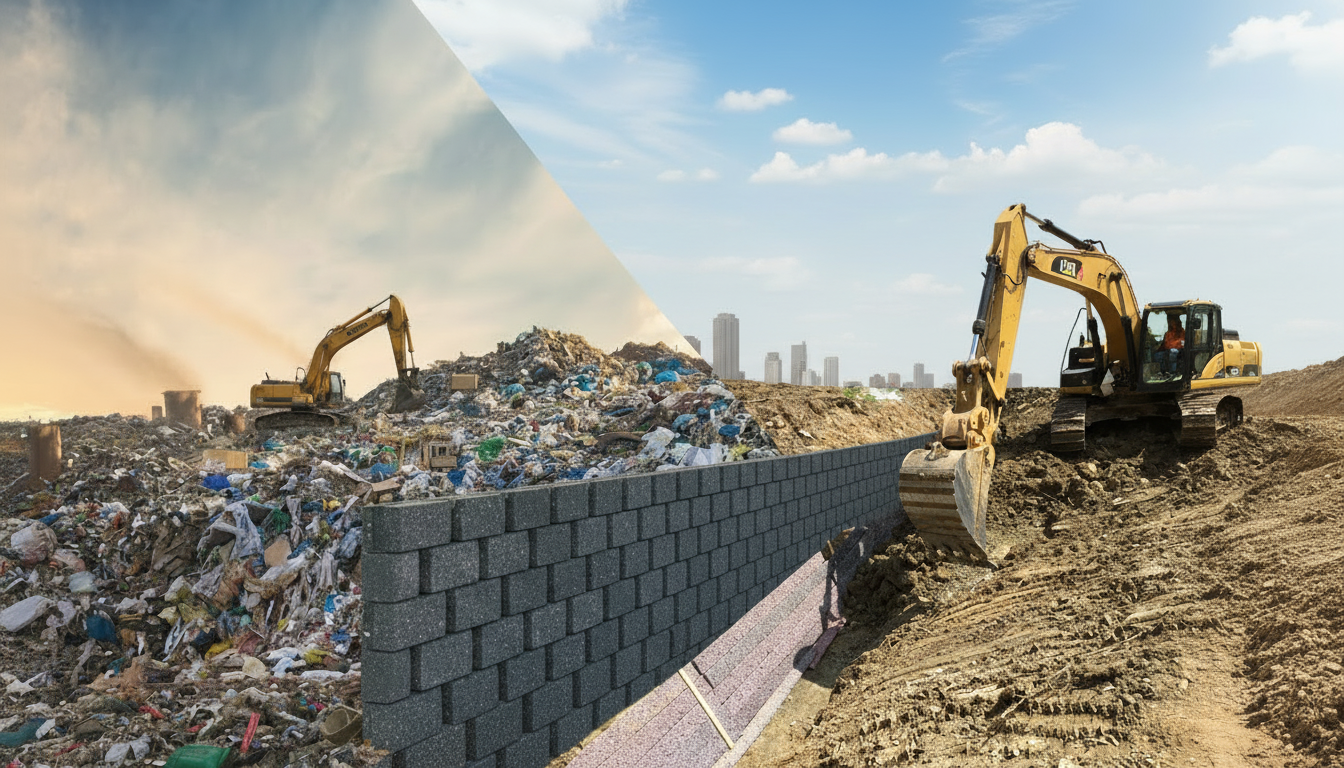
Why Recycled Plastics Are the Future of Drainage Infrastructure
As aging infrastructure, climate change, and environmental regulations converge, the need for sustainable, high-performance drainage solutions has never been more urgent. This in-depth blog post explores how HydroBlox is leading the charge by transforming hard-to-recycle plastic waste into cutting-edge drainage systems that outperform traditional materials in every category—from durability to cost to environmental impact. Unlike conventional French drains or drywells, Hydroplank technology products are engineered to move water via pressure instead of gravity, allowing for level installation, faster water movement, and dramatically lower risk of clogging or collapse. Readers will discover how Hydroplank technology’s high-void, non-crushable, non-clogging planks—made entirely from landfill-bound plastic—create a circular economy product that’s as strong technically as it is sustainable. The article walks through real-world applications across commercial development, municipalities, solar farms, and agriculture, showing how this innovation solves real drainage problems with fewer materials, lower costs, and longer-lasting results. Whether you’re a civil engineer, project manager, architect, or sustainability lead, this article delivers the clarity, technical credibility, and eco-conscious vision to help you make smarter decisions for your next project.
Get strategic insights delivered monthly. No fluff, just actionable perspectives on the challenges facing business leaders today.
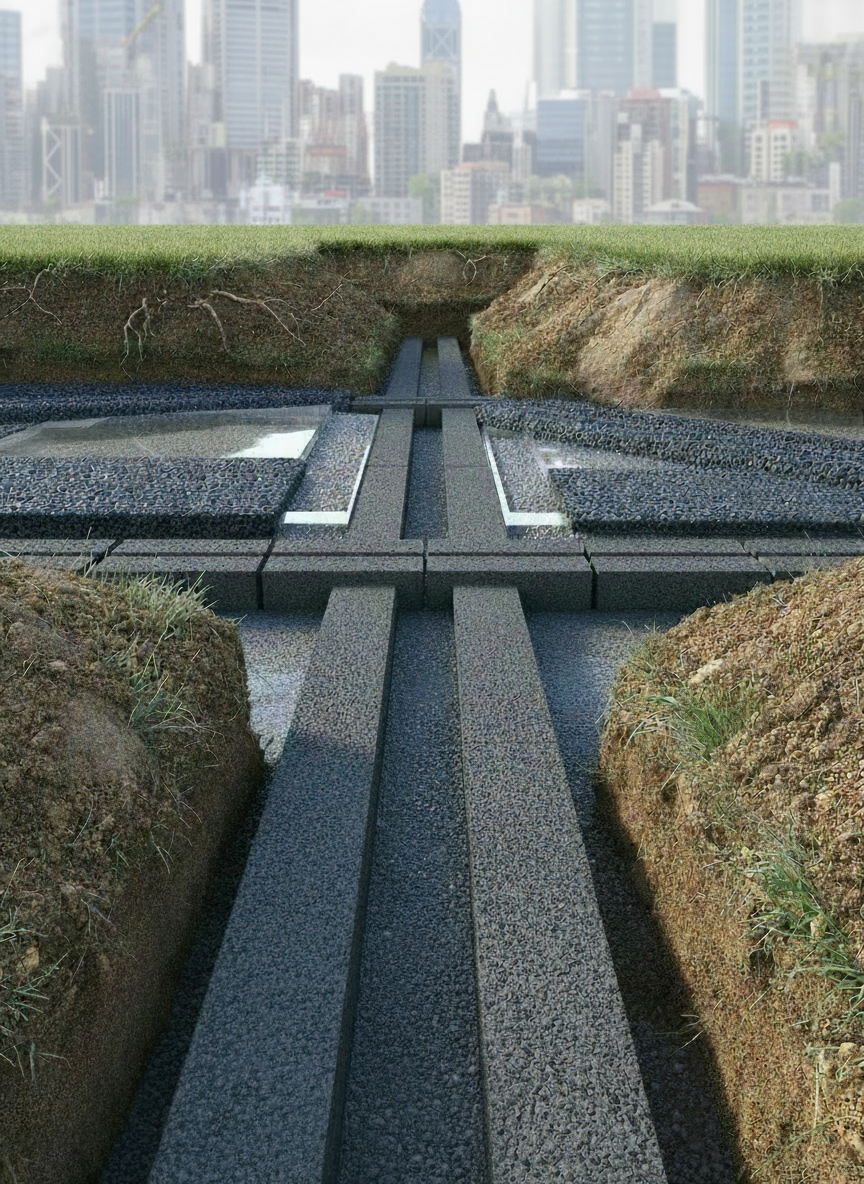
Table of Contents
- Introduction
- The Problem with Traditional Drainage Systems
- The Environmental Opportunity in Recycled Plastics
- What Makes Hydroplank Technology Different?
- Engineering Advantages: Pressure Over Gravity
- Performance in Real-World Applications
- Cost, Installation, and Maintenance Benefits
- Meeting Regulatory Requirements Sustainably
- Industry Use Cases: Commercial, Municipal, Agricultural & More
- Final Thoughts: Building the Future, One Plank at a Time
1. Introduction
The global infrastructure industry is at a critical crossroads. Aging systems, increasing rainfall intensity due to climate change, stricter stormwater regulations, and public demand for sustainable building materials are all forcing a reckoning with how we manage water. Drainage infrastructure, often overlooked, plays a vital role in preventing flooding, protecting buildings, preserving roadways, and ensuring public safety.
And yet, much of our current approach is outdated. Clay-based soil, crushed stone, and perforated pipe systems fail in wet conditions, clog over time, and require frequent maintenance or costly replacement. Meanwhile, mountains of plastic waste sit in landfills and oceans, compounding the environmental challenges we face.
What if these two problems—stormwater and plastic waste—had a single, scalable solution?
Hydroplank technology answers that question with a definitive “yes.” By transforming hard-to-recycle plastic into high-performance water management products, HydroBlox isn’t just innovating—it’s redefining what drainage infrastructure can be.
2. The Problem with Traditional Drainage Systems
Traditional subsurface drainage relies heavily on perforated pipe systems surrounded by gravel and wrapped in fabric. The premise is simple: create void space where water can travel and slowly infiltrate the ground. However, this method introduces multiple limitations:
- Gravity-Dependent Flow: These systems require slope. In flat areas or those with inconsistent grading, water stagnates or fails to drain properly.
- Clogging: Fine soil, silt, and debris eventually clog the holes in the pipe and the surrounding gravel, even with geotextile barriers in place.
- Crushing: Over time, especially under heavy soil loads or vehicular traffic, these pipes can collapse.
- Complex Installation: Excavation depth, slope planning, gravel transport, and precise backfilling make installation labor-intensive and costly.
- Maintenance: Once clogged or crushed, these systems are difficult (and expensive) to access and repair.
These limitations aren’t just inconvenient—they’re expensive and environmentally harmful.
3. The Environmental Opportunity in Recycled Plastics
Plastic pollution is a global crisis. Millions of tons of plastic are discarded annually, much of it labeled “non-recyclable” due to its composition or contamination. This plastic often ends up in landfills, waterways, or incinerated—none of which are sustainable outcomes.
Hydroplank technology takes what others call waste and repurposes it into infrastructure.
Key Sustainability Highlights:
- 100% Recycled Input: Hydroplank technology products are made from thermoplastics that would otherwise be headed to a landfill.
- No Virgin Materials: Unlike PVC or HDPE pipes, Hydroplank technology products do not rely on petroleum-based virgin resins.
- Zero Additional Aggregates: Because of their internal high-void structure, Hydroplank technology require no gravel, reducing the carbon footprint associated with stone transport.
- End-of-Life Durability: These products don’t break down, degrade, or leach—meaning they last for decades without environmental risk.
This is what a circular economy looks like in action.
4. What Makes Hydroplank Technology Different?
At the heart of Hydroplank technology’s innovation is its core product: a high-strength, high-void plastic plank that moves water via pressure—not slope. This distinction is more than a marketing claim—it’s a fundamental reengineering of how drainage works.
Hydroplank Technology Core Product Features:
- Material: 100% recycled thermoplastics, designed for strength and permeability
- Structure: An interwoven, irregular pattern creates pathways for water while filtering out debris
- Form Factor: Modular, lightweight planks that connect end-to-end or side-by-side
- Performance: Non-clogging, non-crushing, and incredibly durable
Additionally, the system includes transition boxes (to connect to pipe systems), stormwater boxes (which store up to 52 gallons), and HydroNoodles (ideal for garden containers or fill in larger bed areas).
5. Engineering Advantages: Pressure Over Gravity
Traditional drainage design assumes that water moves downhill—Hydroplank technology proves that it doesn’t have to.
How It Works:
Water enters a Hydroplank technology and moves through it not by slope, but by hydrostatic pressure. As one section fills, water is pushed into the next, creating a continuous flow—even on flat terrain. Because the planks don’t rely on slope or gravity, they can be installed level—an enormous advantage in urban or low-lying areas.
Key Technical Advantages:
- Installs Flat: No trench slope engineering required
- No Clogging: Tight internal weave prevents silt or soil from entering the flow path
- No Crush Risk: Thermoplastic matrix holds shape under heavy loads
- Consistent Flow: Pressure-fed design allows for quicker and more reliable movement of water after storms
This isn’t a “fancy pipe”—it’s an entirely different engineering category.
6. Performance in Real-World Applications
Hydroplank technology has been used in applications ranging from backyard drainage to multi-acre commercial and municipal developments. Results consistently show:
- Faster dry times after rain
- No standing water in formerly ponded areas
- No system failures over time
- Lower labor and install costs
- Minimal disruption to landscapes
Whether the goal is to redirect stormwater from a parking lot, dry out athletic fields, prevent water intrusion at a building foundation, or manage runoff from a solar farm, Hydro Fix offers a robust, repeatable solution.
7. Cost, Installation, and Maintenance Benefits
Aside from performance, Hydro Fix offers tangible savings at every stage of a project:
1. Installation
- No gravel or geotextile fabric
- No slope measurement or trenching at angles
- Easy to cut, join, and compact
- Fewer site prep steps = faster deployment
2. Material Handling
- Lightweight and stackable for easy transport
- Can be moved by hand—no heavy machinery required
3. Long-Term Maintenance
- No filters to replace
- No risk of pipe collapse or gravel compaction
- No clogged drain fields
In side-by-side cost comparisons with French drains or drywells, Hydro Fix often reduces installation costs by 30% to 60%, with a significantly longer life expectancy.
8. Meeting Regulatory Requirements Sustainably
Stormwater systems must now meet evolving compliance frameworks such as:
- NPDES (National Pollutant Discharge Elimination System)
- MS4 (Municipal Separate Storm Sewer Systems)
- LEED and Green Infrastructure Incentives
Hydroplank technology is engineered to meet or exceed these standards. Stormwater boxes can be scaled to meet runoff volumes based on roof size, surface area, and precipitation data. Transition boxes allow the system to connect to conventional pipes or daylight discharges.
With increasing scrutiny on both drainage efficacy and environmental impact, Hydroplank technology is the rare solution that satisfies both engineers and sustainability officers.
9. Industry Use Cases: Commercial, Municipal, Agricultural & More
Hydroplank technology is not a niche product—it’s a platform solution adaptable to any project where water needs to be moved or managed. Here’s how it’s being used:
⚙️ Commercial Developers
- Parking lots and roadways
- Apartment complex drainage
- Warehouse and loading dock runoff
🏛 Municipalities
- Park and recreation drainage
- Roadside water management
- Flood mitigation zones
- School athletic field recovery
🌞 Solar Farms
- Sloped panels cause erosion; Hydroplank technology captures and redirects water
- Prevents trenching damage from large-scale grading
🌾 Agriculture
- Keeps fields dry without compacting soil
- Redirects excess water without disturbing crop beds
🏠 Residential Landscapes
- Foundation waterproofing
- Gutter downspout control
- French drain replacement
10. Final Thoughts: Building the Future, One Plank at a Time
We stand at the convergence of three critical global needs:
- The demand for sustainable materials
- The urgency of better water management
- The necessity for affordable, efficient infrastructure