All articles
Roadside Drainage Without Road Closures: A New Approach for Public Works
Road closures for drainage work are expensive, disruptive, and often avoidable. Hydro Fix gives public works teams a new way to address roadside drainage with shallow, fast, and non-invasive installations. Made from recycled plastic, Hydroplanks require no slope, gravel, or pipe, and can be installed by small crews in tight corridors without heavy machinery. In this blog, we explore how municipalities are saving time and budgets by adopting Hydroplank System for roadside drainage—without shutting down a single lane.
Join the newsletter
Get strategic insights delivered monthly. No fluff, just actionable perspectives on the challenges facing business leaders today.
Overview
Introduction: The Roadblock of Drainage
Drainage repairs are one of the top causes of local lane closures. Between safety barriers, traffic rerouting, and long install times, traditional systems create expensive and unpopular public works projects.
But now, there’s a better way.
Hydroplank systems solves roadside water issues with:
- No road closures
- No trench boxes
- No gravel or pipe
Just fast, level-installed, recycled plastic planks that move water using pressure.
Common Roadside Drainage Issues
- Water pooling along curbs or edges
- Cracking, potholes, and frost heaving from saturation
- Poor slope or low areas holding runoff
- Infiltration and erosion near sidewalks or shoulders
These are costly to fix with French drains or catch basins. And they rarely last.
How Hydroplank Technology Works Roadside
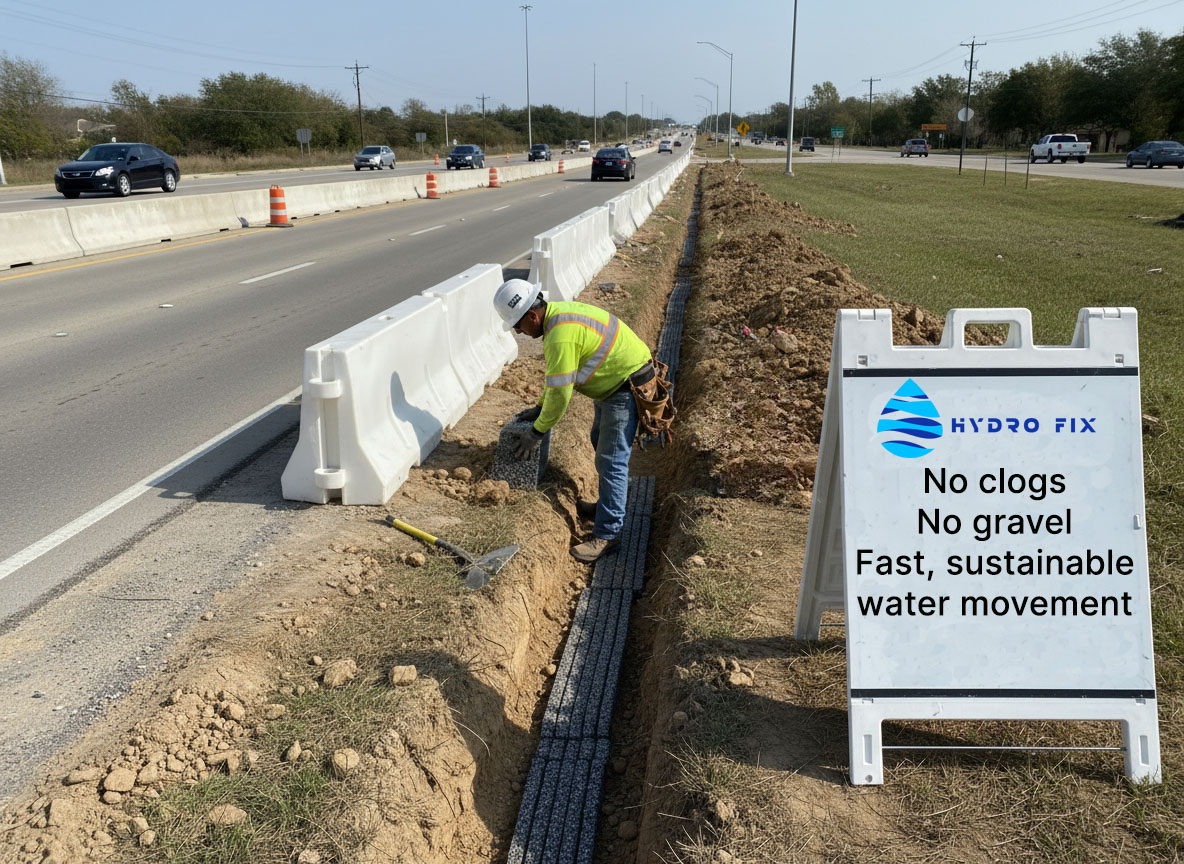
Hydroplanks are installed just below surface level, running parallel to the road. They:
- Intercept surface and subsurface water
- Move water laterally under pressure
- Discharge into swales, ditches, or stormwater inlets
No slope required means Hydroplank systems works even in flat or uneven areas.
Key Benefits for Public Works Teams
✅ No Lane Closures
Install along road shoulders or sidewalks without disrupting traffic flow.
✅ Minimal Excavation
Trench depth of 6–10” means quick cutting and backfilling.
✅ No Gravel or Pipe
Crews don’t need dump trucks or pipe deliveries—only a utility trailer.
✅ Faster Repairs
Most installs take hours—not days—using just two-person crews.
✅ Low Maintenance
No filters, no clogging, no crushing—meaning fewer revisits.
Where to Install Hydroplank Systems Roadside
- Behind curb lines
- Along bike lanes and sidewalks
- Adjacent to retaining walls
- In swale bottoms
In right-of-way green strips
10
Related articles