
All articles
Hydro Fix vs. French Drains: A Detailed Comparison for Modern Installations
French drains have been the go-to solution for decades—but they come with serious downsides: clogs, slope requirements, deep trenches, and short lifespans. Hydro Fix offers a modern alternative using recycled plastic planks that move water with pressure, not gravity. This post compares French drains and Hydro Fix side-by-side in performance, installation, cost, and longevity. Whether you’re a contractor, homeowner, or engineer, this comparison will help you make the smarter, long-term choice for your drainage project.
Join the newsletter
Join our weekly newsletter to get practical insights on stormwater management, drainage solutions, and sustainable infrastructure—delivered straight to your inbox.
Overview
Introduction: Out with the Old?
French drains have been used since the 1800s. The basic design—a gravel-filled trench with perforated pipe—hasn’t changed much since. While widely used, French drains come with recurring headaches:
- Require constant slope
- Clog easily with soil or sediment
- Require deep digging and fabric
- Often fail within a few years
Hydro Fix is here to solve those exact issues.
What Is a French Drain?
A traditional French drain includes:
- A deep trench
- Perforated pipe
- Gravel or stone
- Geotextile filter fabric
Water enters the system via gravel, filters through fabric, and drains through the pipe (only if it’s sloped properly).
What Is HydroBlox?
HydroBlox is a 100% recycled plastic drainage plank that:
- Moves water using hydrostatic pressure (not slope)
- Has a high-void internal structure that prevents clogs
- Requires no gravel, no fabric, and only shallow trenches
It’s installed flat, fast, and lasts for decades.
Side-by-Side Comparison
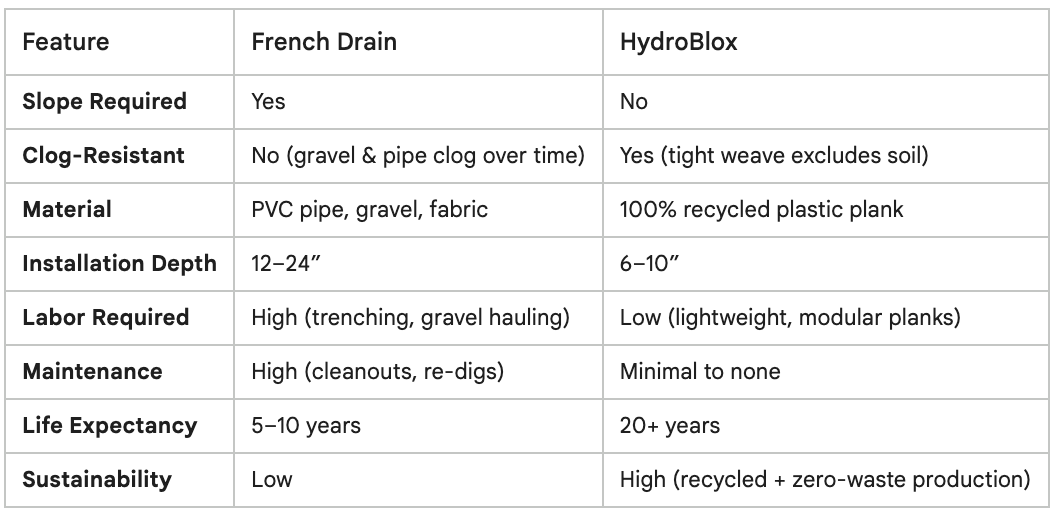
Installation Comparison
French Drain:
- Dig deep trench
- Lay fabric
- Add gravel layer
- Position perforated pipe
- Add more gravel
- Wrap with fabric
- Backfill
Hydro Fix Install:
- Dig shallow trench
- Lay planks end-to-end
- Backfill with topsoil
Done.
Real-World Example
A homeowner in a flat, clay-heavy yard replaced 100 linear feet of clogged French drain with Hydro Fix. The new system:
- Was installed in half the time
- Required no gravel
- Has remained clog-free after 3 seasons
Cost Comparison
Though Hydro Fixhas a higher per-linear-foot material cost, it saves money in:
- Excavation
- Gravel/material delivery
- Installation time
- Long-term maintenance
Total project cost is often 20–40% lower with Hydro Fix install.
When to Choose Hydro Fix as an install solution
- Flat terrain
- Heavy clay soils
- Projects with access limitations
- LEED/ESG-focused developments
- Installers wanting fewer callbacks
December 9, 2025
10
Related articles
No items found.