
All articles
Hydro Fix vs. French Drains: A Detailed Comparison for Modern Installations
French drains have been the go-to solution for decades—but they come with serious downsides: clogs, slope requirements, deep trenches, and short lifespans. Hydro Fix offers a modern alternative using recycled plastic planks that move water with pressure, not gravity. This post compares French drains and Hydro Fix side-by-side in performance, installation, cost, and longevity. Whether you’re a contractor, homeowner, or engineer, this comparison will help you make the smarter, long-term choice for your drainage project.
Join the newsletter
Get strategic insights delivered monthly. No fluff, just actionable perspectives on the challenges facing business leaders today.
Overview
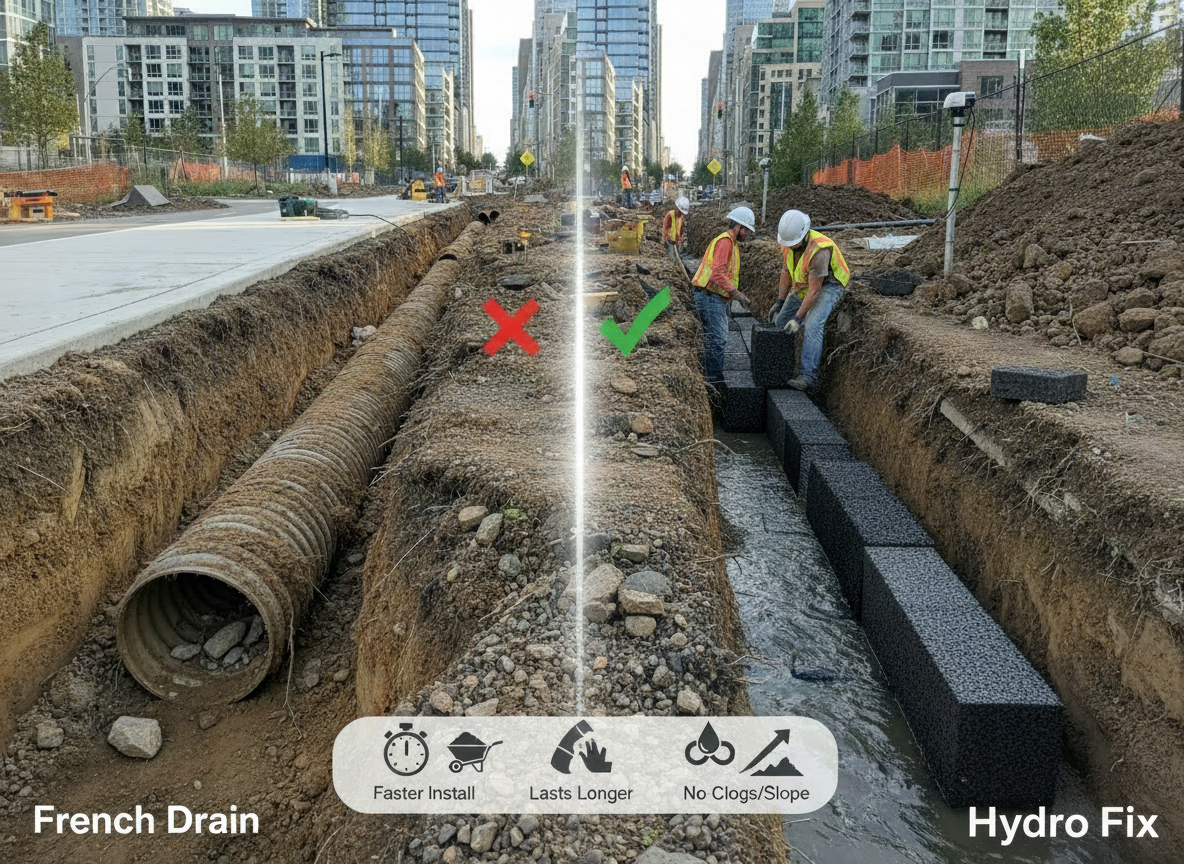
Introduction: Out with the Old?
French drains have been used since the 1800s. The basic design—a gravel-filled trench with perforated pipe—hasn’t changed much since. While widely used, French drains come with recurring headaches:
- Require constant slope
- Clog easily with soil or sediment
- Require deep digging and fabric
- Often fail within a few years
Hydro Fix is here to solve those exact issues.
What Is a French Drain?
A traditional French drain includes:
- A deep trench
- Perforated pipe
- Gravel or stone
- Geotextile filter fabric
Water enters the system via gravel, filters through fabric, and drains through the pipe (only if it’s sloped properly).
What Is HydroBlox?
HydroBlox is a 100% recycled plastic drainage plank that:
- Moves water using hydrostatic pressure (not slope)
- Has a high-void internal structure that prevents clogs
- Requires no gravel, no fabric, and only shallow trenches
It’s installed flat, fast, and lasts for decades.
Side-by-Side Comparison
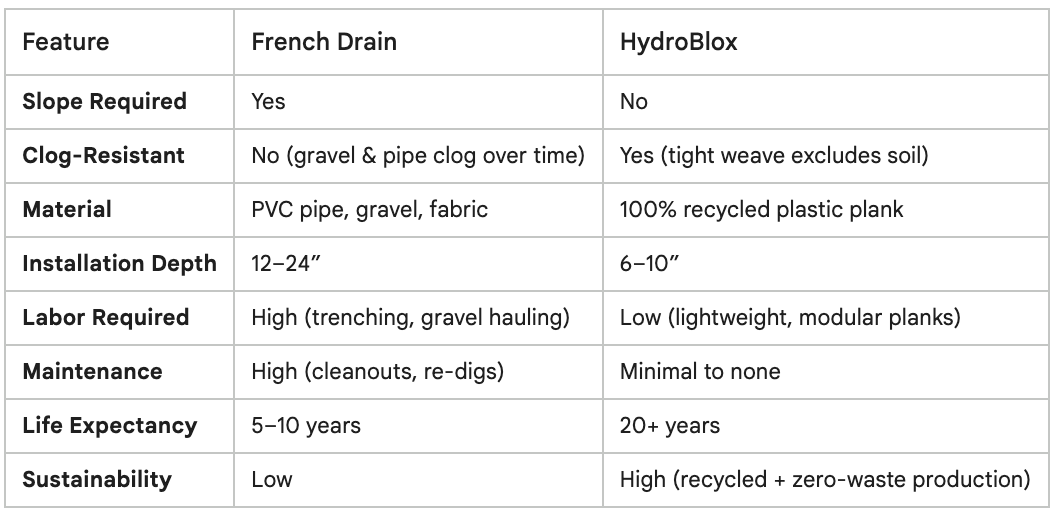
Installation Comparison
French Drain:
- Dig deep trench
- Lay fabric
- Add gravel layer
- Position perforated pipe
- Add more gravel
- Wrap with fabric
- Backfill
Hydro Fix Install:
- Dig shallow trench
- Lay planks end-to-end
- Backfill with topsoil
Done.
Real-World Example
A homeowner in a flat, clay-heavy yard replaced 100 linear feet of clogged French drain with Hydro Fix. The new system:
- Was installed in half the time
- Required no gravel
- Has remained clog-free after 3 seasons
Cost Comparison
Though Hydro Fixhas a higher per-linear-foot material cost, it saves money in:
- Excavation
- Gravel/material delivery
- Installation time
- Long-term maintenance
Total project cost is often 20–40% lower with Hydro Fix install.
When to Choose Hydro Fix as an install solution
- Flat terrain
- Heavy clay soils
- Projects with access limitations
- LEED/ESG-focused developments
- Installers wanting fewer callbacks
December 9, 2025
10
Related articles
No items found.