
All articles
How to Perform a Soil Percolation Test Before Choosing a Drainage Solution
Before choosing a drainage solution, you need to know how quickly your soil absorbs water. A percolation test helps you understand soil performance so you can design the right Hydro Fix system—especially on sites with clay, silt, or variable compaction. In this post, we walk you step-by-step through how to conduct a soil perc test using basic tools, how to interpret the results, and how they influence system sizing and performance. Whether you’re working on a backyard, farm, or commercial site—don’t skip this essential step.
Join the newsletter
Get strategic insights delivered monthly. No fluff, just actionable perspectives on the challenges facing business leaders today.
Overview
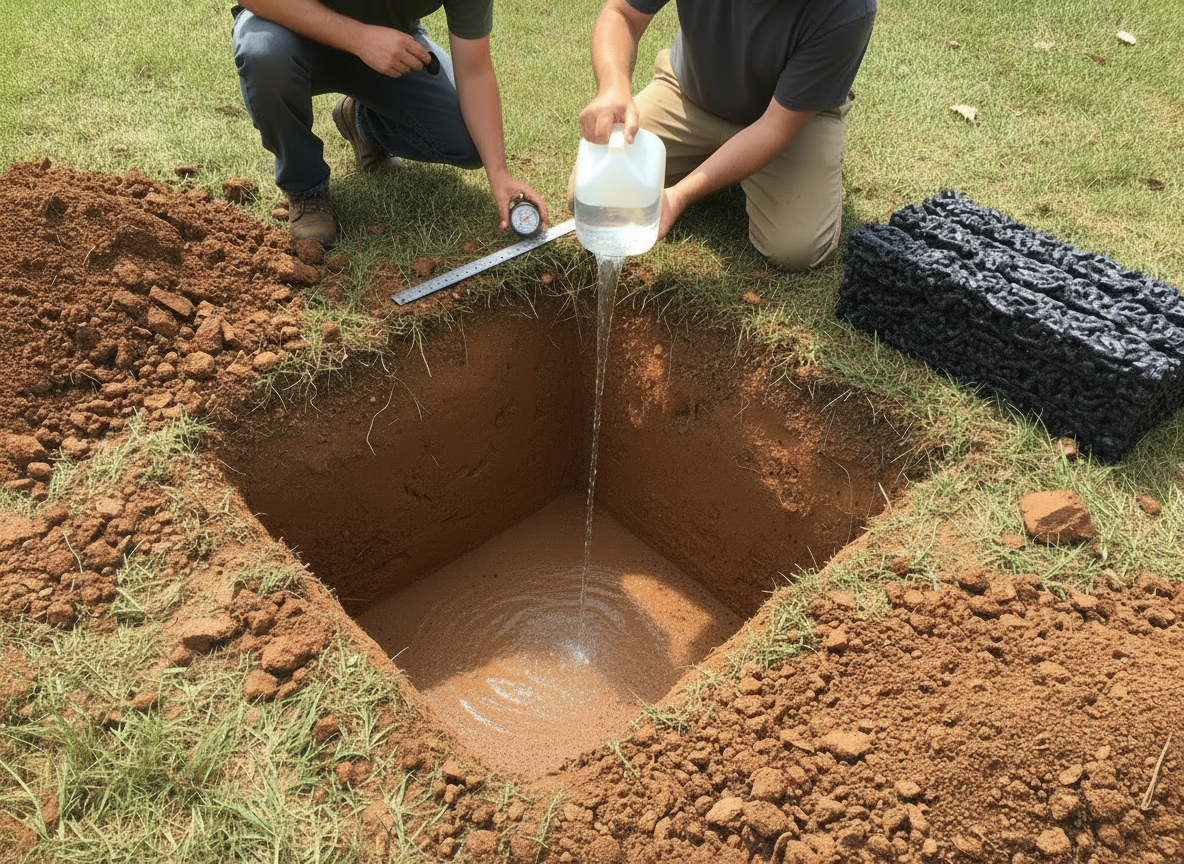
Introduction: Why Soil Percolation Matters
Water always follows the path of least resistance. But if your soil can’t absorb water quickly enough, that path ends at the surface—leading to ponding, runoff, and flooding.
That’s why Hydro Fix recommends a percolation (perc) test before any installation. This simple soil test helps determine:
- How well water drains into the soil
- What size system you need
- Whether to use stormwater boxes, daylight pipes, or gravel assists
When You Should Do a Percolation Test
- New home construction or landscaping
- Foundation waterproofing
- Stormwater compliance planning
- Installing HydroBlox in areas with clay or compacted fill
Step-by-Step: How to Perform a Percolation Test
Step 1: Dig the Test Hole
- Dig a hole 18–24 inches deep and 12 inches wide
- If testing a large site, dig multiple holes spaced out evenly
Step 2: Saturate the Soil
- Fill the hole completely with water
- Let it drain fully (this preps the soil)
Step 3: Refill the Hole
- After the first drain, refill to 1 inch below the top of the hole
Step 4: Measure the Starting Water Level
- Use a measuring stick and note the distance from the water to the ground level
- Record the time
Step 5: Measure Every 30 Minutes
- At 30-minute intervals, measure how far the water has dropped
- Do this at least 4 times
Step 6: Calculate the Percolation Rate
- Find how many inches the water dropped per hour
- Average your 4 readings
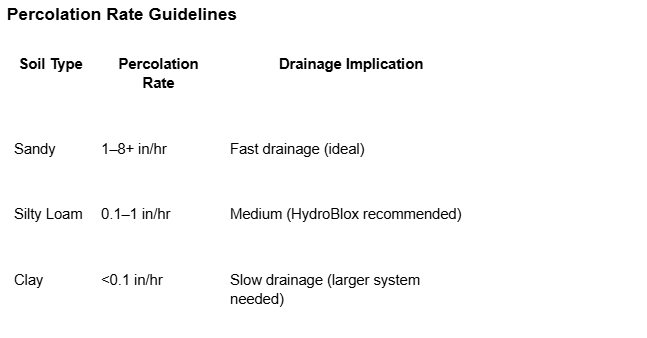
Percolation Rate Guidelines
What If the Soil Fails?
If your percolation rate is too slow:
- Use double planks in your system
- Daylight to a slope or pipe discharge
- Add HydroBlox stormwater boxes to retain and slowly release water
Never install any subsurface system into 100% compacted clay without daylight or retention planning.
Real Example: Suburban Clay Soil
A homeowner near Atlanta had standing water in their yard. The perc test showed <0.1 in/hr. The contractor used:
- Two rows of Hydroplanks
- Stormwater boxes at each downspout
- Daylight discharge to a back slope
Result: Yard dried out within 48 hours after 2” rain.
Internal Linking Opportunities
- Download our percolation test worksheet
- Explore how Hydro Fix handles low-permeability soils
- See our stormwater boxes for slow-drain sites
Schedule a drainage system consultation
October 22, 2025
10
Related articles
No items found.